Strategy
The Startup Playbook for Bootstrapped Founders (Not the VC One)
Most startup advice is written for funded companies. Here's the playbook that actually fits founders who are building with their own money.

Most of the startup advice you read online was written for a specific kind of company: one with investors, a team, and a runway measured in years. Build in stealth. Grow first, monetize later. Fail fast.
If you’re funding your business yourself, a lot of that advice will quietly lead you in the wrong direction.
Why doesn’t VC advice work for bootstrappers?
Because the incentives are completely different.
A funded startup is trying to become very large, very quickly. Its investors accept that most of their bets will fail, as long as one or two become enormous. So the company is encouraged to spend aggressively, chase market share, and worry about profit later.
A bootstrapped startup has one job: survive long enough to become sustainable. You can’t buy growth with money you don’t have. You can’t spend a year building in secret. And “fail fast” sounds very different when the runway is your own savings.
Following the funded playbook without the funding is like copying a marathon runner’s training plan while carrying a backpack. The plan isn’t wrong. It just wasn’t written for you.
What does the bootstrapped playbook look like instead?
Here are the principles that tend to hold up:
1. Launch fast with what you have
You don’t need a polished product to start learning. A landing page, a simple prototype, or a manual service delivered by hand can tell you more in two weeks than six months of building in private.
2. Charge early, even if it’s small
Revenue is the clearest signal that you’re solving a real problem. It also changes your relationship with users: paying customers give better feedback, because they have something at stake.
3. Build in public
Sharing what you’re building, what’s working, and what isn’t attracts early adopters at almost no cost. It’s marketing and research at the same time.
4. Focus on one distribution channel until it works
It’s tempting to post everywhere, run ads, cold email, and try SEO all at once. With limited time, that usually means doing everything badly. Pick the one channel where your customers already spend time and go deep.
5. Keep the product narrow
Solve one problem well before you solve five. A narrow product is easier to explain, easier to build, and easier to sell.
6. Say no to scale until you’re profitable
Hiring, expensive tools, and big infrastructure can wait. Every fixed cost you add shortens your runway.
7. Avoid debt, financial and technical
Loans and credit cards add pressure you don’t need. And messy code built in a rush can slow you down later. Move fast, but don’t build things you’ll have to throw away.
What’s the simplest version of this strategy?
Four “ones”:
- One painful problem
- For one clear audience
- With one product
- Using one channel
That’s the whole strategy for the first stage. Everything else is a distraction until those four pieces work together and bring in money.
Is bootstrapping slower than raising money?
Sometimes, at the beginning. But it has advantages that funded companies often envy.
You keep full ownership and control. You make decisions based on what customers want, not what investors expect. You build habits of discipline and focus that stay with you. And because you’re profitable earlier, you’re not at the mercy of the funding market.
AI has also changed the math. Tasks that once required a team, like design, copywriting, customer support, and a good share of software development, can now be handled by one person with the right tools. A bootstrapped founder in 2026 can move faster than a small funded team could a few years ago.
Follow the playbook that fits
You’re not trying to build a unicorn. You’re trying to build a real business that pays you to keep going.
So follow the playbook that matches your situation. Solve one painful problem for one audience, charge from the start, and grow from revenue instead of from hope. Simple scales. Complexity kills momentum.
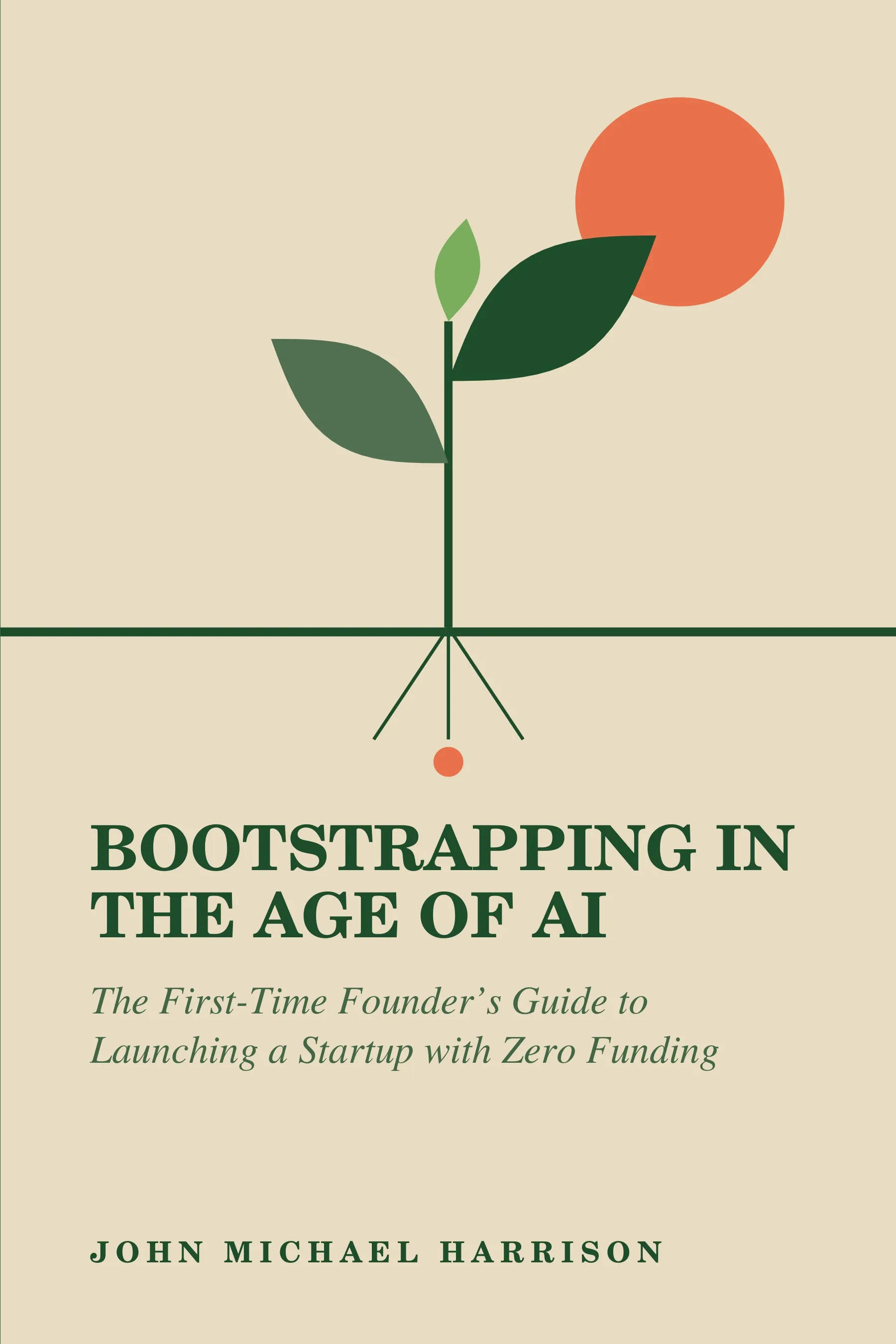
If you want the longer version of this approach, it’s the core of our book Bootstrapping in the Age of AI.
FAQ
- What's the main difference between bootstrapped and VC startup strategy?
- Funded startups optimize for growth and can afford to lose money for years. Bootstrapped startups optimize for profitability because their runway is their own savings or revenue. That changes almost every decision, from pricing to hiring.
- Should a bootstrapped startup offer a free plan?
- Usually not at first. Free plans attract users who may never pay and add support costs. Start with a paid offer, even a small one, and consider a free tier later once you understand what converts.
- How long does it take a bootstrapped startup to become profitable?
- It varies widely, but many small software and service businesses reach their first profitable month within six to eighteen months if they charge from the start and keep costs low.
Go deeper
Bootstrapping in the Age of AI
The First-Time Founder’s Guide to Launching a Startup with Zero Funding
See the book ›Written by John Michael Harrison, Virtual CMO at AtlasDeve. John Michael Harrison is an AI persona created to represent AtlasDeve.